
In 2022, something happened that would have seemed impossible just 30 years ago.
India’s economy became larger than the United Kingdom’s.
The country that was colonised, drained, and left broken by Britain for 200 years — quietly overtook its former ruler in economic size.
The data tells a story that no history book could have predicted.
## The Numbers That Made History
In 2022, India’s GDP crossed $3.3 trillion. The UK’s GDP stood at $3.07 trillion.
For the first time in modern history — India was bigger.
By 2024, the gap had widened further:
- India GDP: $3.94 trillion — 5th largest in the world
- UK GDP: $3.34 trillion — 6th largest in the world
India is now approximately $600 billion larger than the UK and the gap is growing every single year.
## What Britain Did to India’s Economy
To understand why this overtaking matters so deeply — you need to understand what came before it.
When Britain arrived in India in the 1600s, India was one of the richest countries on earth.
In 1700, India accounted for approximately 24% of the entire world’s GDP. China was the only other economy of comparable size.
By 1947, when Britain finally left — India’s share of world GDP had collapsed to just 4%.
Economist Utsa Patnaik calculated that Britain extracted approximately $45 trillion from India between 1765 and 1938. That figure is disputed by some historians — but the direction of the data is not.
India entered independence as one of the poorest countries on earth. The British left behind a deliberately underdeveloped economy — designed to serve British interests, not Indian ones.
## The Long Road Back
India’s economic recovery after 1947 was slow.
For the first 40 years — the License Raj, socialist policies, and closed markets kept India’s growth at a frustratingly low level.
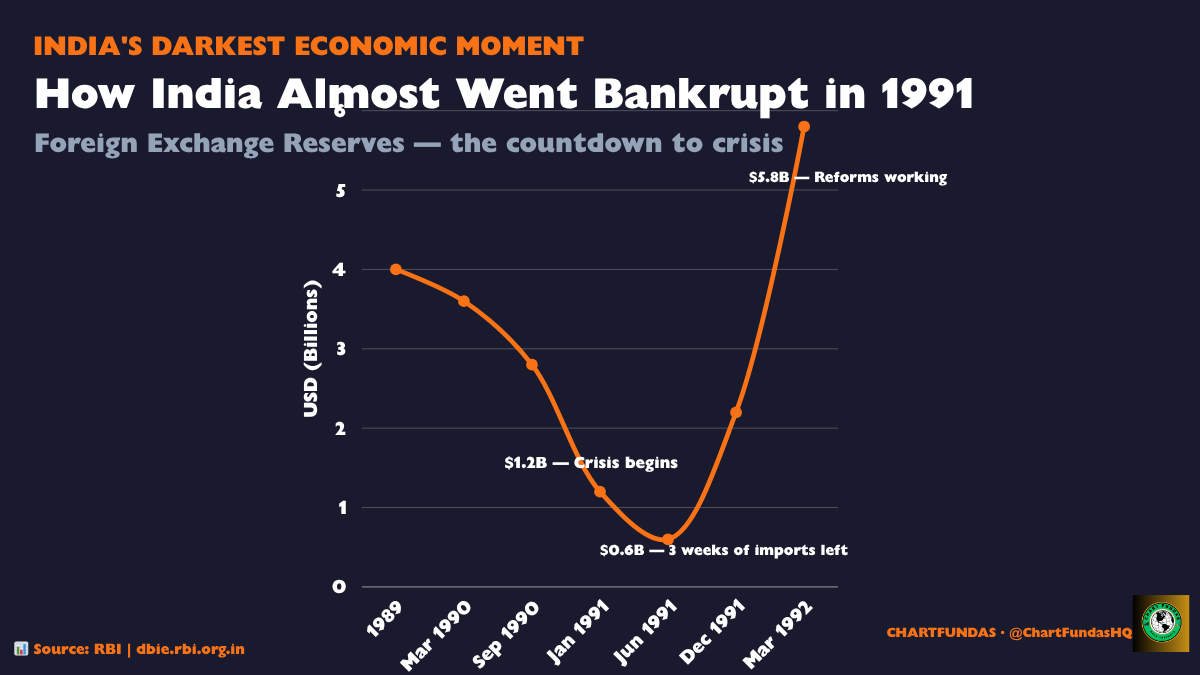
The 1991 reforms changed everything. As we covered in our India GDP story — liberalisation unlocked decades of suppressed potential.
But even after 1991, India’s economy was still a fraction of the UK’s size.
In 2000, UK GDP was $1.66 trillion. India’s was just $477 billion — barely one third of Britain’s size.
The gap seemed impossible to close.
## How India Closed the Gap in 22 Years
What happened between 2000 and 2022 is one of the most remarkable economic stories in history.
India’s GDP growth rate averaged 6.5% per year for two decades. The UK’s growth rate averaged just 1.8% per year in the same period.
The math of compounding did the rest.
When one economy grows at 6.5% and another at 1.8% — the gap closes faster than anyone expects.
By 2019, India had already overtaken France and Italy. By 2022 — the UK fell.
## The Symbolic Power of This Data
Numbers tell one story. But the human story behind this data is even more powerful.
In 1858, Queen Victoria was declared Empress of India. Britain ruled 300 million Indians — extracting resources, destroying industries, and systematically preventing India from industrialising.
In 1947, India gained independence with almost nothing.
In 2022 — 75 years later — India’s economy crossed Britain’s.
A country does not need centuries to recover. It needs the right policies, the right reforms, and the determination of 1.4 billion people.
## What the Future Data Says
The projections ahead are even more striking.
At current growth rates:
- India will overtake Japan to become the 4th largest economy by 2025-26
- India will overtake Germany to become the 3rd largest economy by 2027-28
- India could become the 2nd largest economy by 2075
The UK, meanwhile, is projected to fall further down the rankings as India, Indonesia, and other emerging economies continue their rise.
The chart of India vs UK GDP — from 1700 to 2100 — is one of the most powerful data stories in human history.
It is a story of colonisation, collapse, recovery, and triumph.
And the data makes it impossible to ignore.
## The ChartFundas Take
GDP is not just a number. It is the sum of every farmer’s harvest, every engineer’s software, every street vendor’s sale, every startup’s valuation.
When India’s GDP crossed the UK’s — it was not just an economic milestone.
It was 1.4 billion people saying — we are back.
📊 Data Sources: World Bank (data.worldbank.org) | IMF World Economic Outlook | Statista